
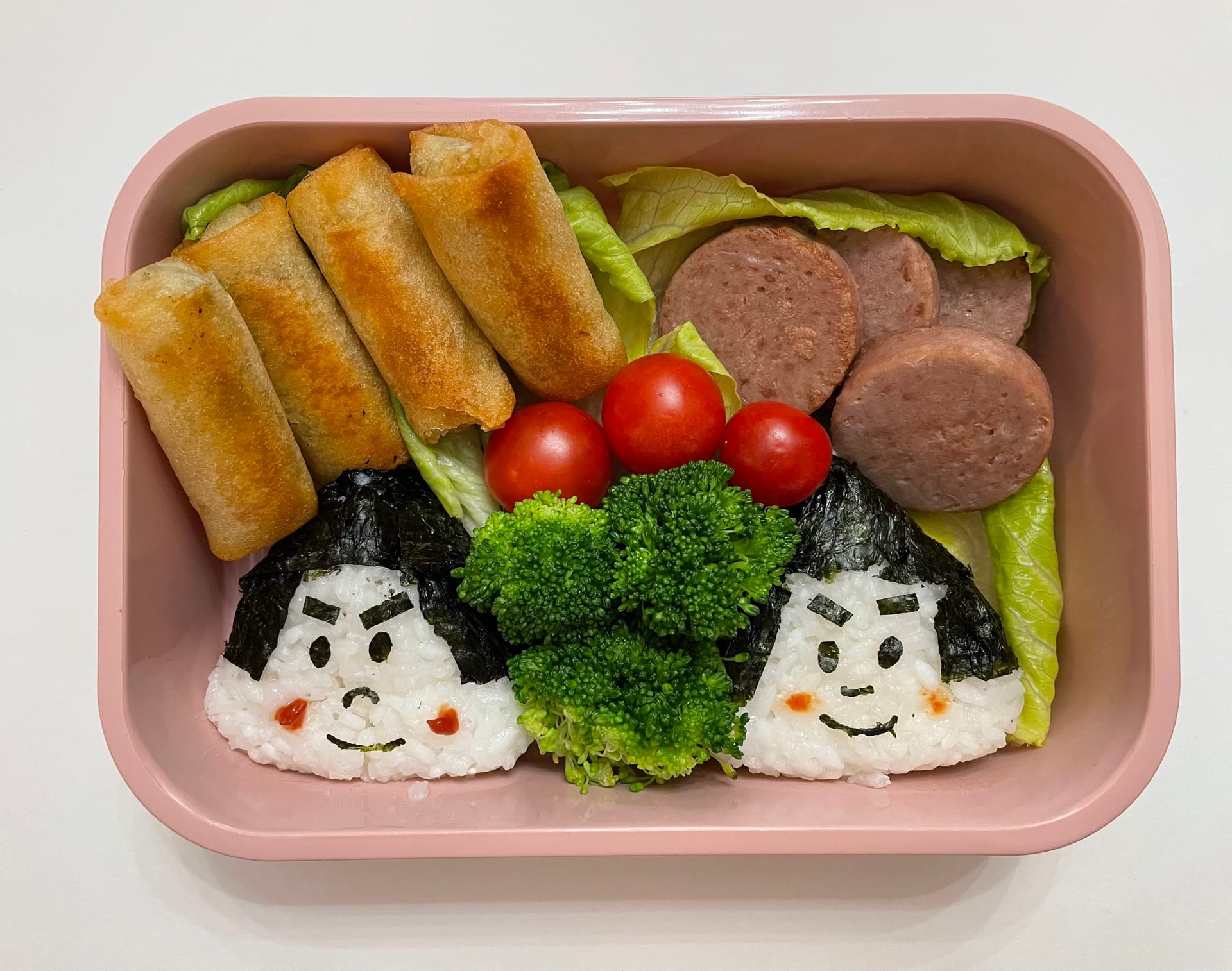
Bentos are single portion takeout or home-packed meals of Japanese origin, often for lunch. They are nutritionally balanced and aesthetically pleasing meals, packaged in a box with a lid. Boxes are often segmented with different parts of a meal placed in different compartments. A traditional bento contains rice or noodles, fish or meat, and pickled or cooked vegetables.
Japanese bento traces roots back to the 5th century with hoshii (dried cooked rice). Simple outdoor rations that farmers carried in sacs later became ornate lacquered containers and now in modern times, cultural art forms. During the 5th to 12th centuries (Kofun to Heian periods), travelers and hunters boiled and dried rice that could be eaten dry or rehydrated with water. In the Kamakura era (1185-1333), portable boxed meals emerged, featuring cooked rice in simple containers to sustain samurais and workers on long journeys. During the Azuchi-Momoyama period (1573-1603), finely crafted wooden lacquered bentos gained popularity for upscale outdoor events, such as cherry blossom viewing and tea ceremonies. Bentos became part of everyday life for travelers and theatergoers having an intermission lunch in the Edo period (1603-1868). During the Meiji era (1868-1912), the expansion of the railway system gave rise to ekiben, regional bentos sold on platforms for travelers to try local cuisine. Bento became standard lunch for urban students and office workers in the Taisho period (1912-1926). Post World War II to the 1980's, mass production, cheap plastics, convenience stores, and microwaves led to bentos becoming a fast and affordable daily option.
Today, bento boxes are available in convenience stores, department stores, and railway stations. Japanese homemakers often spend time making carefully prepared bento for spouses, children, and themselves. The most popular types include ekiben, kyaraben, and oekakiben. Kyaraben are bentos made to look like popular characters from anime, mange, or video games. Oekakiben are picture bentos depicting people, animals, flowers, plants, landscapes, buildings, and monuments. In the 1990's, Japanese mothers began creating cute character bentos as a way to encourage children to try new foods and eat nationally balanced meals.
Comments (0)
Loading...
No comments yet. Be the first to comment!